
Documentation Hub
What Are Relics?
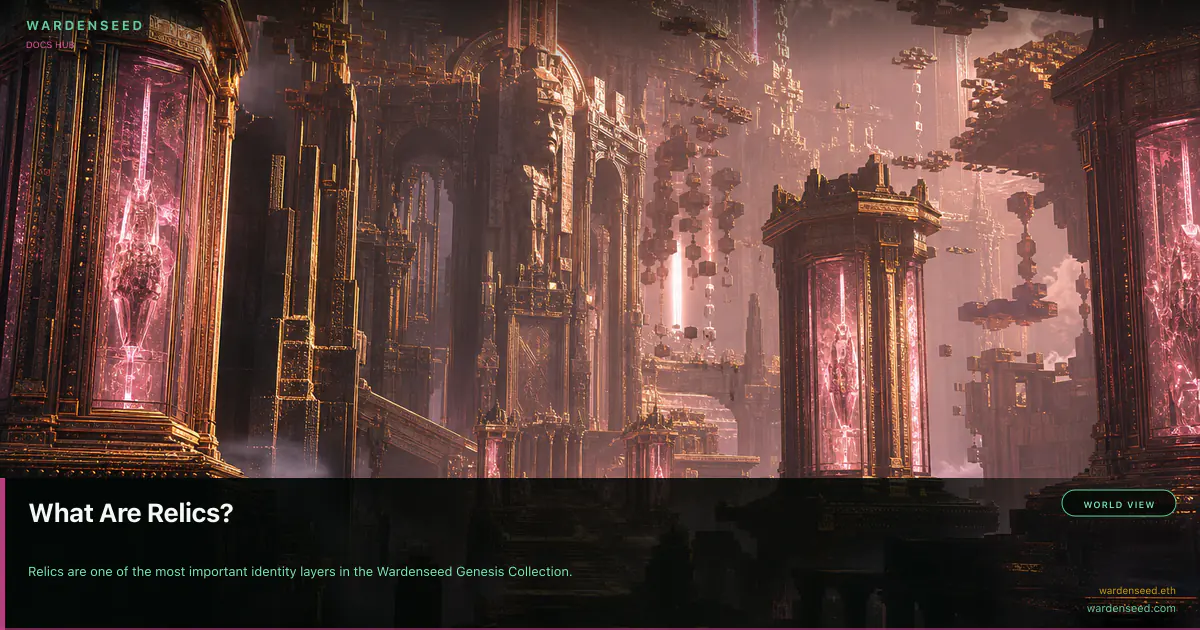
Relics are one of the most important identity layers in the Wardenseed Genesis Collection. In collector language, a relic signals recovered provenance, mythic framing, and compositional rarity inside a fixed supply of one thousand capsules. This guide explains how relic identity works, how it relates to mythic bands, and where to find examples across the encyclopedia.
Understanding Relics
Within Wardenseed, Relic refers primarily to a mythic identity layer assigned deterministically from capsule DNA alongside Spirit, Crystal, Void, and Biolume identities. Relic-forward seeds emphasize artifact grammar: objects that feel recovered, ancient, and structurally load-bearing inside Wardenwood lore.
Relics are not a separate ERC-721 contract or a hidden mint tier. They are part of the metadata and encyclopedia language that helps collectors reason about composition, search intent, and long-tail discovery.
Why Relics Matter
Relic identity helps group seeds for documentation, category pages, and internal links. When an article cites examples, it can point to specific token IDs so readers move from abstract explanation to verifiable metadata.
Collectors often chase relic-themed compositions because they compress narrative and visual signal. Documentation describes that behavior without promising market outcomes.
Relic Rarity System
Relic identity and collection rarity are independent dimensions. A seed can carry Relic mythic identity while sitting in Epic, Rare, or Common rank bands depending on its deterministic rank.
Mythical rank seeds remain the smallest band by count. Relic mythic seeds appear across multiple rarity bands, which is why category pages and featured examples matter for exploration.
Mythical Relics
Mythical band seeds with Relic identity combine top rank scarcity with relic lore grammar. Encyclopedia profiles for these capsules typically receive the strongest collector search intent.
Epic and High-Tier Relics
Examples From The Genesis Collection
Examples of Relic-forward capsules appear throughout the encyclopedia. Featured seeds linked below include capsules commonly used in documentation cross-links such as #329, #551, #742, and #991.
Open any featured seed to inspect trait analysis, related seeds, and linked guides including Relic Rarity System and Genesis Collection Explained.
Frequently asked questions
- What is a Relic?
- In Wardenseed, Relic is a mythic identity layer in Genesis Seed metadata emphasizing artifact provenance and ancient framing.
- How many Relic types exist?
- Relic is one of five mythic identities. Each seed receives exactly one mythic identity from deterministic DNA rules.
- Are Relics stored onchain?
- Seed NFT metadata and ownership are onchain on Base. Extended encyclopedia prose and gameplay state remain off-chain.
- Can a Seed contain multiple Relics?
- No. A seed has one mythic identity layer. Relic may co-exist with multiple trait attributes but not with another mythic identity.
- Why are Mythical Relics sought after?
- They combine the smallest rarity band with strong relic lore signal. Collectors index them for composition, not guaranteed financial return.
Featured Genesis Seeds
Explore the encyclopedia
Continue exploring
Conclusion
Relics give Wardenseed a vocabulary for mythic provenance inside the Genesis Collection. Use relic category pages, trait documentation, and featured encyclopedia seeds to move from concept to verifiable capsule metadata.